Have you ever received a message containing HBU and wondered what the sender was asking? Texting abbreviations can sometimes look confusing, especially when they appear in everyday conversations. However, some expressions are much easier to understand than they seem. HBU is one of those popular shortcuts. People use it to make messages shorter while keeping conversations friendly and interesting. You’ll often notice it in text messages, Snapchat chats, Instagram DMs, and other social media platforms.
Understanding the hbu meaning can help you respond confidently without guessing what someone wants to know. This guide explains its definition, common uses, and meaning in different conversations. You’ll also discover practical examples, suitable replies, and differences between similar abbreviations like WBU and WYD. Let’s explore!
Quick Answer
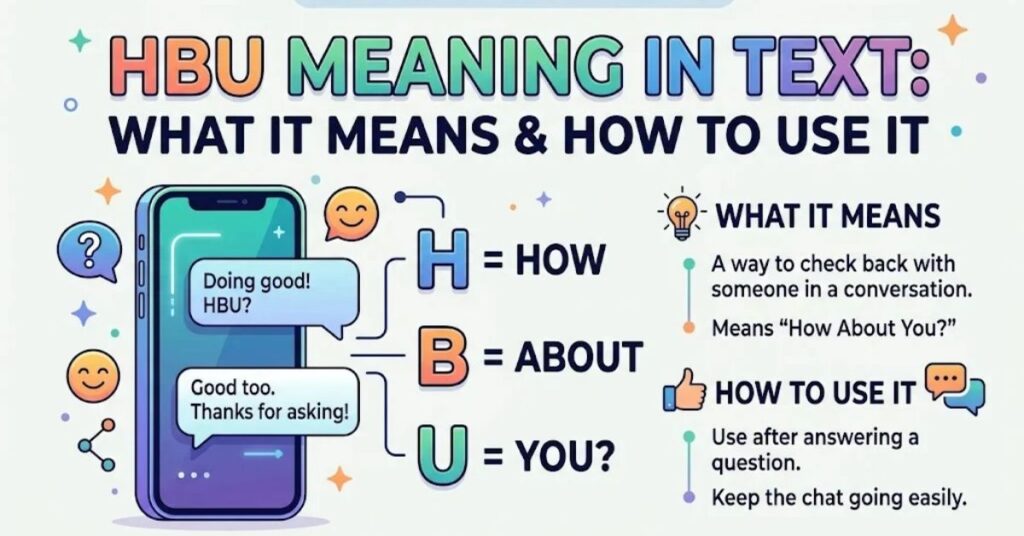
HBU stands for How About You? It’s a popular texting abbreviation people use when they want to ask someone the same question after sharing their own answer.
For example:
Alex: I’m feeling great today. HBU?
Jamie: I’m doing pretty well too!
Here, Alex shares how he feels and then asks Jamie about their experience.
People commonly use HBU to:
- Keep conversations going.
- Ask about someone’s feelings or plans.
- Show interest in another person’s opinion.
- Make text messages shorter.
- Encourage friendly communication.
It’s informal, so you’ll mostly see it in everyday conversations rather than professional writing.
What Does HBU Stand For?
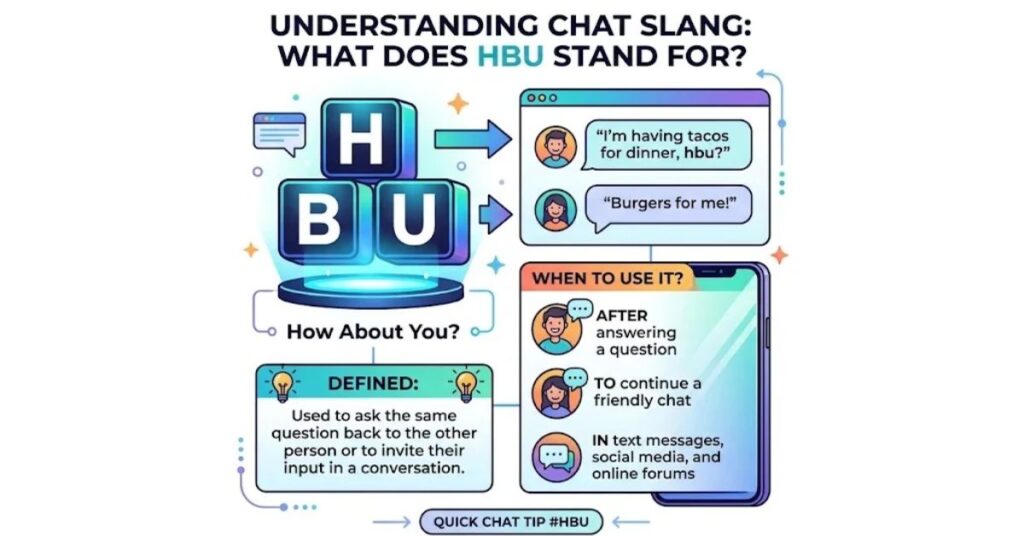
HBU stands for How About You? It’s formed using the first letters of the three words in the original question.
Instead of typing the complete phrase, people simply write HBU to save time. This makes messaging quicker and more convenient.
For example:
Friend: I love watching comedy movies. HBU?
You: I prefer action movies.
Both people understand that the conversation involves sharing movie preferences.
The abbreviation doesn’t have a complicated definition or hidden message. It’s simply a shorter way to return a question.
You’ll commonly encounter it among friends, classmates, family members, and online communities.
What Does HBU Mean in Text?
In texting, HBU means How About You? People use it after answering a question or sharing something about themselves.
Think of it as passing the conversation back to someone else.
For instance:
Emma: I’m staying home tonight. HBU?
Ryan: I’m going out for dinner with friends.
Emma shares her plans and invites Ryan to share his.
The abbreviation works in different situations, including:
- Asking how someone feels.
- Discussing weekend activities.
- Sharing personal interests.
- Comparing opinions.
- Talking about school or work.
The meaning generally stays the same across messaging platforms. The surrounding conversation helps you understand exactly what the sender wants to know.
Why Do People Use HBU?
People enjoy using short expressions because they make everyday communication easier. HBU saves typing time without changing the original question.
Imagine answering several messages throughout a busy day. Typing How About You? repeatedly can feel unnecessary. Three letters make the process quicker.
Here are some common reasons people use it:
- Saves time: You can send a quick response without typing the complete phrase.
- Keeps conversations active: It encourages another person to participate.
- Shows interest: Asking back makes conversations feel more balanced.
- Sounds friendly: It creates a relaxed and approachable tone.
- Fits online culture: Short abbreviations are common in digital communication.
Although it’s brief, HBU helps people maintain natural conversations.
Where Is HBU Commonly Used?
HBU appears across several messaging applications and social media platforms. Its meaning usually remains unchanged regardless of where someone sends it.
Here’s where you might encounter this abbreviation:
| Platform | Common Usage |
|---|---|
| Everyday conversations with friends and family | |
| Snapchat | Quick replies and casual chats |
| Direct messages and story replies | |
| TikTok | Comments and private messages |
| Discord | Gaming and community conversations |
| Facebook Messenger | Personal conversations |
| SMS | Regular text messaging |
For example, someone might send HBU after discussing their favorite music on Instagram or their weekend plans on WhatsApp.
The platform doesn’t change the definition. Context simply explains what the person wants to know.
Is HBU Formal or Informal?
HBU is an informal texting abbreviation. It’s perfectly acceptable when chatting with people you know well. However, professional situations usually require complete words and sentences.
You can comfortably use it with:
- Friends and family.
- Classmates and teammates.
- Gaming partners.
- Social media followers.
- People you regularly chat with.
Avoid using it in business emails, academic assignments, official letters, and professional reports.
For example:
Casual: I’m available tomorrow. HBU?
Professional: I’m available tomorrow. How about you?
The second version sounds more polished and appropriate for workplace communication.
HBU on Popular Social Media Platforms
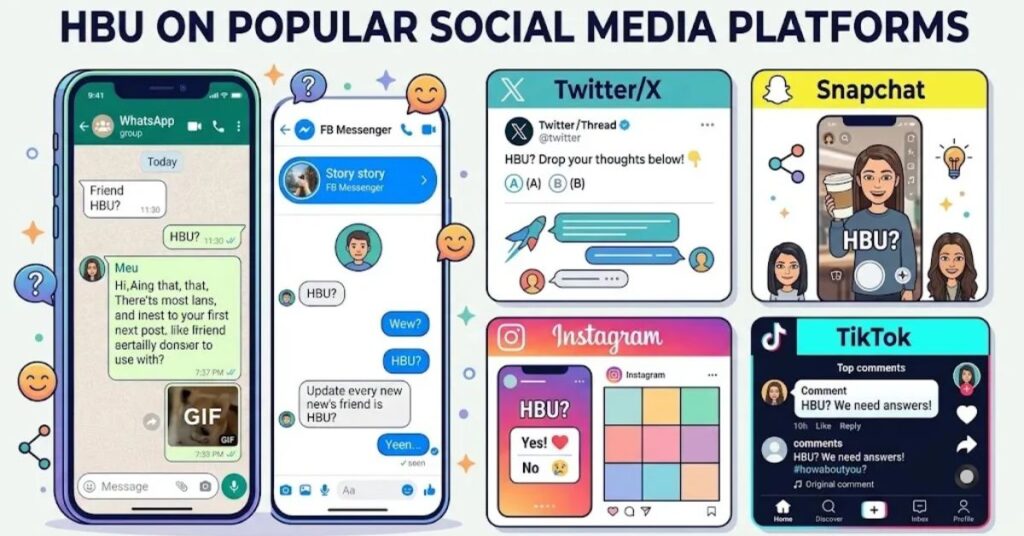
Different social media platforms have their own communication styles. However, HBU generally carries the same meaning across all of them.
Snapchat
Snapchat users often prefer quick messages and short replies. HBU fits naturally into conversations about daily activities, school, and weekend plans.
Example:
Emma: Just got home from school. HBU? 😊
Ryan: Still at football practice.
Here, Emma simply asks what Ryan is doing.
On Instagram, people frequently use HBU in direct messages and story replies. It helps users continue conversations without writing long responses.
Example:
Chris: I love your vacation pictures! Planning another trip soon. HBU?
Taylor: Hopefully, I’m visiting California next month.
TikTok
TikTok users sometimes include HBU in comment sections or private messages when discussing trends, opinions, and personal experiences.
Example:
User 1: I think this new dance trend is hilarious. HBU?
User 2: I actually love it!
Discord
Discord communities use short abbreviations during gaming sessions and casual discussions. HBU can help players exchange updates quickly.
Example:
Player 1: I reached level 50 today. HBU?
Player 2: I’m still trying to beat the final boss.
WhatsApp is popular for personal messaging and group conversations. Friends and family members often use HBU when discussing their routines or plans.
Example:
Sara: I finished my homework. HBU?
Ali: I’m just starting mine.
Real-Life Text Message Examples
The easiest way to understand HBU is to see how people use it naturally. These everyday situations demonstrate its meaning.
Example 1: Talking About Your Day
Olivia: My day was pretty busy. HBU?
Liam: Mine was surprisingly relaxing.
Example 2: Weekend Plans
Noah: I’m going hiking this weekend. HBU?
Mia: I’m staying home and watching movies.
Example 3: Food Conversation
Ethan: I had pizza for dinner. HBU?
Sophia: I made homemade pasta.
Example 4: School
Ava: I already finished the assignment. HBU?
Lucas: I’m almost done with mine.
Example 5: Gaming
Jordan: I’m playing Minecraft tonight. HBU?
Mason: I’m hopping on Valorant later.
These examples show that HBU works whenever someone wants to return a question.
Does HBU Always Mean How About You?
In everyday texting, HBU almost always means How About You? It’s widely recognized across social media and instant messaging platforms.
However, abbreviations can sometimes represent different expressions in specialized industries, workplaces, or organizations.
For example, a technical document might use the same letters for an unrelated term. That’s why context matters when interpreting unfamiliar abbreviations.
If someone sends:
Friend: I love summer. HBU?
There’s little reason to search for another definition. They’re simply asking whether you feel the same way.
When you encounter HBU in casual messages, the standard meaning is usually the correct one.
Why HBU Keeps Conversations Going
Good conversations involve more than one person. When someone shares information and asks a question back, both participants get an opportunity to contribute.
That’s exactly what HBU accomplishes.
Compare these two messages:
Without HBU:
I’m watching Netflix tonight.
This response shares information but doesn’t invite another person to answer.
With HBU:
I’m watching Netflix tonight. HBU?
Now the other person has a natural reason to respond.
This small abbreviation helps prevent conversations from ending too quickly. It also shows that you’re interested in hearing about someone else’s activities, opinions, or experiences.
What Does HBU Mean from a Girl?
When a girl texts HBU, she usually means How About You? The abbreviation itself doesn’t automatically suggest romantic interest or flirting.
She might simply want to know about your day, hobbies, feelings, or plans.
For example:
Girl: I’m having a wonderful day. HBU?
She’s asking how you’re feeling. There’s no secret meaning in those three letters.
However, the overall conversation can provide additional clues. If she regularly asks questions, shares personal stories, and keeps messaging, she might enjoy talking with you.
Still, don’t assume romantic interest based on one abbreviation.
Example Conversations
Talking About School
Girl: I finished studying for tomorrow’s test. HBU?
You: I still have one chapter left.
Weekend Plans
Girl: I’m going to the beach this weekend. HBU?
You: I’m visiting my grandparents.
Favorite Movies
Girl: I love mystery movies. HBU?
You: I usually watch action films.
What Does HBU Mean from a Guy?
When a guy sends HBU, it carries exactly the same meaning. He’s asking How About You? after sharing his own answer or experience.
The abbreviation doesn’t automatically indicate attraction, friendship, or romantic intentions.
For example:
Guy: I’m playing football later. HBU?
He’s simply asking about your plans.
Pay attention to the surrounding conversation instead of interpreting three letters as a secret message.
More Examples
Fitness
Guy: I went to the gym today. HBU?
You: I went for a run.
Gaming
Guy: I’m playing EA FC tonight. HBU?
You: I’m going to play Minecraft.
Music
Guy: I’ve been listening to pop lately. HBU?
You: Mostly rock music.
These examples demonstrate how naturally HBU fits into everyday conversations.
Does HBU Ever Flirt?
HBU isn’t a flirting abbreviation by itself. It simply means How About You? However, people can use it during romantic or playful conversations.
For example:
Taylor: I love coffee dates. HBU? 😊
This message might sound slightly playful depending on the relationship. However, the abbreviation itself doesn’t create a romantic meaning.
If someone consistently shows interest, asks personal questions, and makes an effort to continue conversations, those behaviors may provide better clues.
Consider these factors:
- The overall message tone.
- Whether the person frequently initiates conversations.
- Their choice of words and emojis.
- How they respond to your messages.
- Your existing relationship.
Always consider the complete conversation before making assumptions.
How to Reply to HBU
Replying to HBU is simple. Just answer the question the sender asked before deciding whether to continue the conversation.
Your response can be short, friendly, or detailed depending on the situation.
If They Ask About Your Day
Friend: I’m doing great today. HBU?
Reply: I’m doing pretty well too. Thanks for asking!
If They’re Talking About Plans
Friend: I’m staying home tonight. HBU?
Reply: I’m meeting a few friends for dinner.
If They Ask About Your Opinion
Friend: I really enjoyed that movie. HBU?
Reply: I liked it too! The ending was amazing.
If You Want to Continue the Conversation
Give your answer and ask another question.
Friend: I’m learning Spanish. HBU?
You: I’m learning French. How long have you been studying Spanish?
This approach makes conversations more interesting and encourages meaningful replies.
HBU vs WBU vs WYD
HBU, WBU, and WYD frequently appear in casual text messages. Although they look similar, each abbreviation asks something slightly different.
| Abbreviation | Full Form | Purpose |
|---|---|---|
| HBU | How About You? | Asks for your answer |
| WBU | What About You? | Asks about your situation |
| WYD | What Are You Doing? | Asks about your current activity |
For example:
- HBU: I’m feeling great. HBU?
- WBU: I finished my homework. WBU?
- WYD: Hey! WYD tonight?
HBU and WBU are very similar. However, WYD asks what someone is currently doing rather than returning an earlier question.
Which One Is More Common?
All three abbreviations appear frequently in digital communication. HBU and WBU are especially useful when exchanging answers or opinions.
WYD works differently because it asks about someone’s current activity.
There isn’t one universally correct choice. People generally use whichever expression feels natural in their conversations.
HBU vs WBU: Is There a Difference?
HBU means How About You? while WBU means What About You?
In everyday texting, these expressions have almost identical purposes. Both help someone return a question after sharing personal information.
| HBU | WBU |
|---|---|
| How About You? | What About You? |
| Friendly and conversational | Friendly and conversational |
| Used in casual texting | Used in casual texting |
| Invites another person’s response | Invites another person’s response |
For example:
HBU: I’m watching a comedy tonight. HBU?
WBU: I finished my assignment. WBU?
Most people understand both expressions without difficulty. You can generally use either one in informal conversations.
Is HBU Considered Slang?
Yes, HBU is internet slang and a common texting abbreviation. It belongs to informal digital communication rather than standard written English.
People use it because online conversations often favor short, convenient expressions.
You’ll frequently see HBU among:
- Friends and family members.
- Classmates and coworkers chatting casually.
- Gaming communities.
- Social media users.
- Online discussion groups.
Using slang doesn’t automatically make your writing incorrect. It simply means you’re choosing language that suits a relaxed setting.
However, remember your audience. Complete phrases usually work better in professional emails, academic assignments, and official communication.
Common Mistakes When Using HBU
Although HBU has a simple definition, people sometimes misunderstand how and when to use it.
Here are four common mistakes worth avoiding.
1. Using It in Formal Emails
HBU can sound too casual in professional communication.
Incorrect: Dear Professor, HBU regarding the assignment?
Better: Dear Professor, how about you regarding the assignment?
A more natural professional sentence would be: What are your thoughts regarding the assignment?
2. Using It Without Context
Sending HBU without an earlier question or topic might confuse the receiver.
Unclear: HBU?
Better: I’m excited about the weekend. HBU?
The second message gives the other person something meaningful to respond to.
3. Assuming It Has a Hidden Meaning
Some people believe HBU secretly indicates romantic interest.
In reality, it simply means How About You? Consider the complete conversation before making assumptions about someone’s intentions.
4. Confusing HBU with WYD
These abbreviations ask different questions.
- HBU: How About You?
- WYD: What Are You Doing?
Use HBU when returning a question. Choose WYD when asking about someone’s current activity.
Similar Texting Abbreviations
Once you understand HBU, you’ll probably encounter other internet abbreviations. Learning these expressions makes online conversations easier to follow.
| Abbreviation | Meaning |
|---|---|
| HRU | How Are You? |
| WYD | What Are You Doing? |
| WBU | What About You? |
| LMK | Let Me Know |
| TBH | To Be Honest |
| IMO | In My Opinion |
| IDK | I Don’t Know |
| BRB | Be Right Back |
| LOL | Laughing Out Loud |
| TTYL | Talk To You Later |
| SMH | Shaking My Head |
These expressions appear in text messages, group chats, and social media discussions.
Understanding common texting slang helps you recognize messages quickly and respond with confidence.
Tips for Using HBU Naturally
Using HBU correctly doesn’t require special knowledge. A few simple habits can make your messages sound more natural.
Follow these practical tips:
- Answer the original question before adding HBU.
- Use it with people who understand texting abbreviations.
- Keep your message relevant to the conversation.
- Avoid using it repeatedly in every response.
- Match your language to the other person’s communication style.
- Choose complete sentences in professional situations.
For example:
Natural: I usually spend Sundays with my family. HBU?
This sounds friendly because you’ve shared something before asking the other person.
If you’re unsure whether someone understands the abbreviation, simply write How About You? in full.
More Real-Life HBU Conversation Examples
Here are additional examples showing how HBU works in different everyday situations.
Example 1: Talking About Work
Chris: I finished all my tasks early today. HBU?
Taylor: I still have one meeting before logging off.
Example 2: Discussing Hobbies
Emma: I’ve started learning guitar. HBU?
Noah: I’m taking photography classes.
Example 3: Planning the Weekend
Olivia: I’m visiting my cousins this weekend. HBU?
Liam: I’m going camping with friends.
Example 4: Gaming Chat
Player 1: I finally unlocked the new character. HBU?
Player 2: I’m still working on the last challenge.
Example 5: Travel Plans
Sophia: I’m thinking about visiting Japan next year. HBU?
Ethan: I’d love to travel to Italy.
Example 6: Favorite Food
Mia: Sushi is my favorite food. HBU?
Lucas: I could eat pizza every day.
Each conversation follows the same pattern. One person shares information and invites the other to respond.
When Should You Avoid Using HBU?
Although HBU works well in casual conversations, certain situations require more formal language.
Avoid using this abbreviation in:
- Business emails.
- Job applications.
- Academic assignments.
- Professional reports.
- Official letters.
- Formal customer support requests.
For example:
Too casual: I’m available tomorrow. HBU?
More professional: I’m available tomorrow. How about you?
The complete phrase sounds clearer and more appropriate.
You should also avoid using HBU when communicating with someone unfamiliar with internet slang. Not everyone recognizes texting abbreviations.
When clarity matters most, writing the complete question is always a safe choice.
Why Is HBU So Popular?
HBU remains popular because it makes everyday communication quick, simple, and friendly.
Modern messaging often involves short responses. People don’t always want to type complete sentences when exchanging basic information.
Several qualities explain its popularity:
- Easy to remember: Three letters represent a familiar question.
- Quick to type: It saves time during conversations.
- Widely understood: Many social media users recognize it.
- Friendly tone: It encourages people to share their experiences.
- Versatile usage: It works across different messaging platforms.
Another reason is its conversational value. Instead of ending a discussion after answering, you give someone else an opportunity to participate.
That’s what makes this small abbreviation useful in everyday digital communication.
Frequently Asked Questions
What does HBU mean in text?
HBU means How About You? It’s a casual texting abbreviation used to ask someone the same question after sharing your own answer.
What does HBU mean on Snapchat?
On Snapchat, HBU means How About You? People use it in quick chats when discussing daily activities, feelings, and weekend plans.
What does HBU mean on Instagram?
On Instagram, HBU means How About You? It commonly appears in direct messages, story replies, and casual conversations.
Is HBU the same as WBU?
They’re nearly identical. HBU means How About You? while WBU means What About You? Both invite someone to share their answer.
Is HBU considered slang?
Yes, HBU is internet slang. People commonly use it in informal text messages, social media conversations, and online chats.
Can HBU have different meanings?
In everyday texting, HBU almost always means How About You? Specialized industries or organizations may use different meanings depending on context.
Is HBU rude?
No, HBU isn’t generally rude. It’s a friendly abbreviation that invites someone to share their thoughts or personal experiences.
Should I use HBU in professional communication?
It’s better to avoid HBU in professional messages. Writing How About You? in full creates a clearer and more polished impression.
Related Texting Abbreviations
If you’re exploring internet slang, learning related abbreviations can improve your understanding of everyday digital conversations.
Here are some useful topics to explore next:
- WBU Meaning in Text
- WYD Meaning in Text
- HRU Meaning in Text
- TBH Meaning in Text
- IDK Meaning in Text
- IMO Meaning in Text
- WYLL Meaning in Text
- HML Meaning in Text
- Common Texting Abbreviations
- Snapchat Slang Guide
- Instagram Text Abbreviations
These related expressions frequently appear alongside HBU in social media conversations. Exploring their meanings will help you understand modern texting language more confidently.
Final Thoughts
Understanding the hbu meaning makes everyday texting much easier. HBU stands for How About You? and provides a quick way to return a question after sharing your own answer. You’ll commonly find it on Snapchat, Instagram, WhatsApp, TikTok, Discord, and other messaging platforms. Although people sometimes use it during playful conversations, the abbreviation doesn’t automatically suggest flirting or romantic interest. Its actual meaning depends on the surrounding messages. Remember that HBU works best in informal communication. Professional emails and official messages usually require complete phrases.
Now that you know how to use HBU, recognizing it in conversations should feel effortless. Try using it when chatting with friends or asking someone about their plans. Remember the difference between HBU, WBU, and WYD so you can choose the right expression. Small texting shortcuts can make communication smoother when you use them correctly. Keep learning new abbreviations and enjoy more natural online conversations!

Abu Bakar is a meaning-focused content writer specializing in names, word definitions, phrases, and symbolic interpretations. He focuses on researching origins, explaining concepts, and presenting clear, engaging information that helps readers understand the deeper meanings behind everyday words.
Connect with Me on: Facebook